
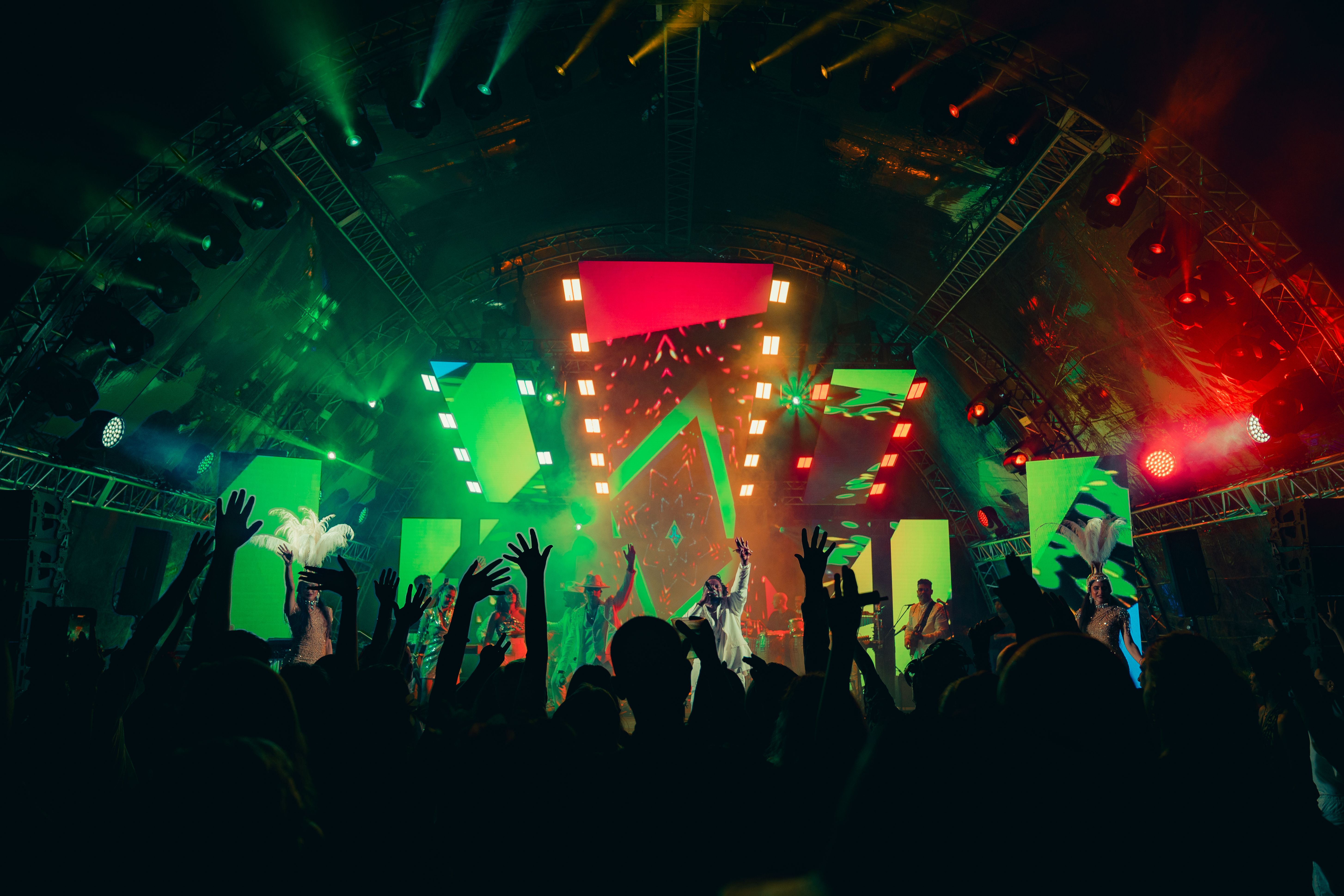
India’s live entertainment industry is no longer limited to concerts and large festivals. From live music at restaurants and cafés to comedy shows, college events, corporate experiences, cultural festivals and ticketed concerts, live entertainment has become a growing part of India’s experience economy.
The organised live events segment grew 44% in 2025 to reach approximately ₹145 billion, according to the FICCI-EY Media & Entertainment report. The report also estimates that the segment could reach ₹196 billion by 2028.
Behind this growth is an interconnected ecosystem involving much more than the artist on stage.
What Is the Live Entertainment Ecosystem?
The live entertainment ecosystem is the network of people, businesses, platforms and infrastructure that come together to create and deliver an in-person entertainment experience.
At its core are five major stakeholders:
-
Artists who create and perform
-
Venues that host experiences
-
Organisers who plan and execute events
-
Brands that invest in audience experiences
-
Audiences who attend, engage and spend
Supporting them are ticketing platforms, production companies, sound and lighting providers, event agencies, hospitality businesses, sponsors, technology platforms and other service providers.
Each part of this ecosystem influences the others.
1. Artists: The Creative Core
Artists are at the centre of live entertainment. Singers, DJs, bands, comedians, dancers, instrumentalists and other performers bring the creative element that audiences come to experience.
For artists, live performance can also be an important part of building a sustainable career. An EY study of Indian music creators found that live performances and professional fees were among the key sources of income for creators.
The opportunity is expanding beyond traditional concert stages. Artists can now perform at restaurants, hotels, private events, corporate gatherings, college festivals, brand activations and community events.
This makes artist discovery, availability, pricing and booking infrastructure increasingly important to the ecosystem.
2. Venues: Where Experiences Come to Life
A live experience needs a physical environment.
Concert arenas and auditoriums remain important, but the definition of an entertainment venue is expanding. Restaurants, cafés, bars, hotels, clubs, universities, community spaces and even unconventional locations are becoming platforms for live entertainment.
For venues, entertainment can become more than an occasional event. Regular programming can help create a distinct identity, encourage repeat visits and give audiences another reason to choose one venue over another.
This is contributing to the rise of venue-led entertainment, where the venue itself becomes part of the experience.
3. Organisers: Connecting the Moving Parts
Organisers sit between creative ideas and execution.
They coordinate artists, venues, production, ticketing, marketing, sponsorships, permissions, logistics and audience management. For larger events, this can involve hundreds of interconnected decisions.
As India's event industry grows, organisers are also handling a wider variety of formats. The FICCI-EY report notes growth across concerts, government events, personal events, ticketed experiences and other event categories.
Technology is increasingly helping organisers manage this complexity by bringing information, communication and transactions into more structured systems.
4. Brands: Turning Events Into Experiences
Brands are becoming increasingly involved in live entertainment because audiences interact differently with an experience than they do with a traditional advertisement.
According to a 2026 EY-Parthenon and BookMyShow study, 78% of Indian consumers surveyed said they preferred spending on experiences over products. The research also found that 59% of surveyed live-event attendees recalled brands they engaged with at events.
This has created opportunities for brands to participate through sponsorships, artist collaborations, experiential activations, product sampling, branded performances and immersive installations.
For brands, live entertainment can therefore function as both an entertainment format and a marketing channel.
5. Audiences: More Than Spectators
The audience is no longer simply the final destination of the entertainment supply chain.
Audiences discover artists through social media, streaming platforms and digital communities. They influence what becomes popular, share experiences online and increasingly decide which events deserve their time and money.
India's growing appetite for live experiences is visible in the expansion of ticketed entertainment. EY reported more than 130 concert days in 2025 with audiences of 10,000 or more per day.
At the same time, live entertainment is not restricted to mega-events. Smaller experiences allow audiences to discover emerging artists and participate in more community-driven formats.
Technology Is Connecting the Ecosystem
One of the biggest changes in India's live entertainment industry is the shift from fragmented processes to digital infrastructure.
Artist discovery, profile verification, availability, booking, payments, contracts, ticketing and audience communication can increasingly be managed digitally.
Platforms such as Aruva are part of this transition, connecting artists, venues and event creators through a more structured approach to discovery and booking.
The objective is not simply to put artists online. It is to make the relationship between the different stakeholders easier to manage.
Where Is India’s Live Entertainment Ecosystem Heading?
India's live entertainment industry is moving toward a more organised, experience-led model.
Large concerts will continue to attract audiences, while smaller venues, independent artists, cultural events and experiential brand activations create additional opportunities across cities.
The next phase is likely to involve better digital infrastructure, more professionalised artists and venues, greater participation from brands, and increasingly diverse event formats.
The result is an ecosystem where artists create the experience, venues provide the environment, organisers make it happen, brands add commercial value, technology connects the stakeholders, and audiences give the entire system its purpose.
Conclusion
India's live entertainment ecosystem is much bigger than the stage.
It is a network of creative talent, physical spaces, organisers, technology, brands and audiences working together to create experiences. As India's appetite for live entertainment grows, the strength of this ecosystem will depend on how efficiently these stakeholders can discover one another, collaborate and create value together.
For artists and event creators, platforms like Aruva are helping build the digital layer needed to make that connection more structured, transparent and accessible.